Wednesday, October 11, 2006

Are They Talking English?


Loved the recent news item on the lack of understanding of internet jargon with the people who actually are using the internet. Geeks aside, who is this meant for? Phishing, RSS, and on and on it goes. And don't think the Management Geeks are out of the clear either. ERP, SAP, CRM what is it with the letters? Or is that it? If you need to ask, you don't get to use the thing that the letters stand for...even if your business does depend on it to run as effectively as possible. Daft.
See link above for article

Sunday, October 08, 2006

Blogging? Then Get To Technorati

Want to know who is posting what that you want to know about? Technorati is the place to find out what is happening in real time all the time. Check it out.


Technorati Profile

Thursday, October 05, 2006

My Story - How I Found My Passion

REWIND: This is one of my first blog posts. Thought I'd share it here again. Speaks pretty much to everything that motivates me to work with business owners.


I guess my story started quite a few years ago when I was working in marketing for the life insurance and disability market. We marketed only to business owners and professionals, a special product range developed for the different professional Associations. Naturally, in the process I got to hear the stories of many of our clients, and it always seemed odd to me that nobody else seemed to be at all interested in their business challenges. Certainly not the advisors they were paying for help in different areas!

This puzzled me a bit, even though I really did understand that Nobody cares about our business!

When I asked these owners if they got help with their business planning and managing and growing and developing their business, the answer was invariably, No.

So I thought then I'd start asking accountants whether they were actually helping their business clients with these things. Then the answer came back time and time again

"Oh yes, we can do that."

But do they actually do it?

"Er... No."

Why not? I asked

"...You know "(look of incredulity on their face) "Nobody has ever asked me!"

Well I dont know how someone is going to ask for something they dont know they dont know... or quite reasonably expect their accountant would tell them about if they didn't know something they needed to know.

So began my interest in finding accountants and other advisors to business who actually wanted to help their clients grow their business (which of course, can only grow the business of the advisor too!). That's about my story in the nutshell.

What did I discover then? I guess you can imagine that the accountants by and large aren't doing much of it because;

1) they dont really know how and

2) they dont know how to get paid for it. Add to that

3) they are not working on their business either.

That is pretty much where I am at. You could say this became my Mission in some ways. Smarter thinking for business. Something you can't do that you want to? Okay, I can help.

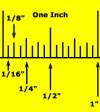
I think of every business owner who has put so much on the line to start their business (including accountants!) and the statistics on how many fail, and many of them fail only for the sake of-imagine it- one inch difference in strategy. It's miniscule! All it takes.

Of course I hold the belief very closely to me, that the time and the way we spend that time in our life, is our life, and so it is far too precious to fail for want of that extra inch of difference.

Hope that makes sense.

Lindy

www.designbusinessengineering.com

Tuesday, October 03, 2006

New Thinking - X10 - Ten Times (More)

Great video of Michael Hewitt-Gleeson, former student of Edward DeBono and fascinating guy speaks at a seminar. Check out what he has to say about selling and new ways of thinking of the sales process.

http://video.google.com/videoplay?docid=-1914750376913106627

Thursday, September 14, 2006

Do You Know This Much About Your Clients?

This article from an IT website caught my attention today. Well, actually, it was sent to me by an IT friend so I could hardly avoid it. I promise, he is not a "metal T-shirt" wearer, but it's fascinating to see how trends can follow a particular group.

The article read:

IT people “twice as likely” to wear heavy metal t-shirt as other people

IT people “twice as likely” to wear heavy metal t-shirt as other people

NEW YORK (September 13, 2006) - According to new research, IT staff are twice as likely to wear a heavy metal t-shirt as their non-IT counterparts. The study of 1000 office workers, by Intermedia.NET, the leading Microsoft Exchange host, also found IT types 34% more likely to sport a ponytail. Other key findings:

Media Contact
  • Black jeans are 63% more popular among IT types than other workers
  • IT workers are 32% less likely to wear clean clothes every day of the week than business managers
  • Business and IT people are equally likely to wear a cellphone belt clip

The survey also found that despite unhelpful stereotyping such as Apple’s ‘Mac and PC’ commercials, IT and business people are equally likely – at 5% each – to wear dated 1990s spectacles.

Confirming one stereotype, however, was the finding that IT workers were almost twice as likely to carry a Maglite and a Leatherman. Both businesspeople and IT people prefer a Leatherman over a MagLite, and are 20% more likely to carry one.

“Our research provides an interesting insight into the life of IT people,” said Rurik Bradbury, VP marketing for Intermedia.NET. “Our large Microsoft Gold Certified team of engineers was comforted that IT people are twice as likely to wear Megadeth and similar t-shirts, and that black jeans and ponytails are still hot items. However, they were distraught to find that the cellphone belt clip has gone ‘mainstream’ and lost its identification with the IT subculture.”

One interesting finding from the study was that IT staff are more likely to wear an expensive suit than a cheap one. While business staff are still far more likely to wear any suit at all, IT people shun cheap suits, with 33% more of them choosing a pricey suit over a bargain one. Fake expensive watches are currently not popular among techies, with only 2% of IT people admitting to wearing one.


This lends some credence to recent studies on advertising that suggest looking at Other things that a prospective client for your business is interested in - not just the item that you'd like them to buy from you... and concentrate some marketing effort to locate him/her where they like to hang out. Here's the hint: People who move homes, also like to travel, buy cars, drink wine, etc.


Monday, September 04, 2006

Referrals – Feeding Your Circle of Influence

Every now and then, and regularly enough that one might think I’d be less surprised by it, I get smacked in the face with a Flash Of The Bleeding Obvious (‘FBO’).But it catches me off-guard every time! I experience surprise every time I encounter another one of those obvious things that was as if invisible to me, and apparently, invisible to others, as we go about doing what we do all day.

One of those recent FBO’s concerned ‘invisible but obvious’ items relating to the way that we can work with business clients, and yet never develop a reliable systematic method for generating referrals from those closest to our business. While we can lament that we don’t get more referrals from them, if we even think about it at all, or wile away the time lamenting that lack of regular referrals, or dreaming up complicated, devious and covert plans to get referrals from clients (but never put into action), we overlook the two most obvious facts.

1. We’ve never actually gone through the exercise to explain to clients in detail the full range of services we can provide and the contexts where we can help and

2. We’ve been terrible at passing on good quality, well qualified and regular referrals for THEIR business.

I bumped into this latest one as I was relating to a client about a networking group that I’d happily stumbled upon somewhat by happy accident. Business Network International is a group that was set up over 20 years ago in the US, in what was I suppose, a BFO for the founder Ivan Misner. As fate would have it, BNI was operating in Australia, and even more fortuitously, I was invited to attend a meeting close to home to investigate first hand how BNI works.

Now here’s the thing. I’ve been to enough so-called networking events, and staged more than a few myself. I’ve banged the drum trying to get referral networks working and without exception, they have been largely unproductive. The idea was great, yes, everyone was interested, but when push came to shove, nada. Oh, some referrals but nothing that sustainable and all too often, only one way. What was different with the BNI methodology was a strict criterion on selection, critical evaluation of the proposed members, a formal structure that is enforced – which has the effect of installing that thing that is most often missing – accountability! And a financial and time commitment at the outset that each member must make, if they wish to participate and be accepted.
So you’ve joined…and what happens? Now you have at least 15, but more probably 20+ business owners, who are influential within their circle of colleagues and clients, who know what you do, and how to communicate that to others, and have been trained to identify a possible client for you. Imagine that! More than two dozen people respected in their field, trained to recognize opportunities for your business, and committed and able to communicate your point of difference to someone who needs what you do. That takes my breath away.

Now, this is where it gets even sillier. Just suppose for a moment, that you are an accountant, or a business advisor of some kind, or indeed anyone who deals with other businesses in the course of your business. And while you’re thinking about how you’d like to get more referrals from your clients too… think about what it would be like if your job was not just to do what you do for your clients, but what if you were to adopt an attitude of care for your clients that included a commitment to help those people to develop their business too. Can you possibly imagine how strong would become the relationship with your clients? You know, even if you never thought about it until now, that nobody cares about our business like we do. And you’ll know that it is true, when I say that when someone else takes an interest in my business, and my success, then I am genuinely interested in finding out more about that person. Because they have demonstrated values that are important to me. They mark themselves as a person that is important to me, and because I value people who are important to me, then this relationship will develop and get stronger over time. So you are a business advisor taking an interest in your clients business, beyond just serving their regular business needs as you’ve always done, now you are doing something that money cannot buy. Do you think that this client who is now a part of your success team, is going to be loyal to you?

Of course they are.

But let me say, this is possible. This is doable. And this is not something to even attempt to fake. If you cannot genuinely be interested in your clients’ business, then this is not something to even consider. If, on the other hand, you have an attitude to others that allows for the development of an authentic and caring relationship between your clients and yourself with a view toward growing each business to its fullest potential, then start making a list of people who you know care about their business enough to want to get active too. Do it now and keep adding to it. Then do what you have to do, to get your message clear about what you do in your business, who you do it for, and how you do it. And while you’re at it, think about what purpose this business that you’ve put your heart and soul into is supposed to serve for you. Think about whether it is meeting that objective and if there is a gap, then get some help to get you back on track to reach the target you set for yourself when you started.

And get excited!

Lindy

Saturday, August 26, 2006

Framing and Emotion. Science Catches Up

Some scientific data to back up what marketers have known for years...
that decisions are made emotionally.

Study: Emotion rules the brain's decisions
Updated 8/6/2006 7:02 PM ET
By Dan Vergano, USA TODAY

The evidence has been piling up throughout history, and now neuroscientists have proved it's true: The brain's wiring emphatically relies on emotion over intellect in decision-making.
A brain-imaging study reported in the current Science examines "framing," a hot topic among psychologists, economists and political hucksters.

Framing studies have shown that how a question is posed — think negative ads, for instance — skews decision-making. But no one showed exactly how this effect worked in the human brain until the brain-imaging study led by Benedetto De Martino of University College London.
De Martino and colleagues asked 20 men and women to undergo three 17-minute brain scans while being asked to gamble — or not — with an initial pot of English pounds worth about $95. When told they would "keep" 40% of their money if they didn't gamble, the volunteers chose to gamble only 43% of the time. Told they could "lose" 60% of the money if they didn't gamble, they rolled the dice 62% of the time.

Their chances of winning the money were carefully explained beforehand, and participants knew the odds were identical. But the framing effect still skewed their decisions significantly.
The brain images revealed the amygdala, a neural region that processes strong negative emotions such as fear, fired up vigorously in response to each two-second (on average) gambling decision. Where people resisted the framing effect, a brain region connected to positive emotions such as empathy, and another that activates whenever people face choices, lit up as well, seeming to duke it out over the decision.

"We found everyone showed emotional biases, more or less; no one was totally free of them," De Martino says. Even among the four participants who were aware they were inconsistent in decision-making, "they said, 'I know, I just couldn't help myself,' " he says.

The study comes amid a burst of research into neuroeconomics, which studies the brain's role in buying and selling decisions. Economists have embraced the idea in recent years that irrational psychology, rather than cool calculation, plays a role in such decisions. The brain study goes further and suggests that emotions rule decisions almost completely.
"The study is a very nice application of recent knowledge we've acquired about healthy cognition and emotion," says neuroscientist Antonio Damasio of the University of Southern California in Los Angeles, who was not part of the study.

"As a neuroethicist, I'd urge caution about over-interpreting this elegant study," says Judy Illes of the Center for Biomedical Ethics at Stanford University. In real life, decision-making is "an extremely complex behavior with both rational and irrational components," she says, and it is hard to capture completely in a lab setting.

Still, Illes calls the study intriguing and predicts it will lead to more work in the neuroeconomics arena.

De Martino acknowledges the study's limitations; the decisions described as rational in the study were simply consistent ones, not a measure of intelligence or correctness, he says. "I'm not sure you would really want someone like Mr. Spock making all your decisions."

In fact, people who lack emotions because of brain injuries often have difficulty making decisions at all, notes Damasio. The brain stores emotional memories of past decisions, and those are what drive people's choices in life, he suggests. "What makes you and me 'rational' is not suppressing our emotions, but tempering them in a positive way," he says.

Though neuroeconomics is a hot field, with hundreds of researchers attending a recent meeting in Paris on the topic, Damasio says brain imaging's biggest potential lies in teaching: "Our education system ignores the role of emotion in learning and decision-making."